

Track brand mentions in Arabic, and you unlock a side of your audience most brands never truly see. If your brand operates anywhere across the Middle East and North Africa, chances are your customers are talking about you in Arabic right now, on Twitter, Facebook, Instagram, TikTok, and dozens of forums and news sites you might not even be monitoring. The challenge is that Arabic is not one simple language to track. It is a rich mix of Modern Standard Arabic, Egyptian dialect, Gulf dialect, Levantine dialect, and North African dialect, often written in a blend of Arabic script, English letters, and even numbers replacing certain sounds. This is exactly why generic, English-first social listening tools fail to capture the full picture of what people are really saying about your brand.
Tracking brand mentions in Arabic is not a luxury anymore. It is a necessity for any business serious about protecting its reputation, understanding customer sentiment, and staying ahead of competitors in the region. In this guide, we will break down exactly how to track brand mentions in Arabic effectively, the tools and techniques that actually work, and how AIM Insights, powered by AIM Technologies, makes this process simple, accurate, and actionable.
Why Tracking Brand Mentions in Arabic Is Different
Before diving into the how, it is worth understanding the why. Arabic language monitoring comes with unique complexities that most Western-built tools simply were not designed to handle.
Here is what makes Arabic tracking uniquely challenging:
- Dialect diversity: Egyptian Arabic, Saudi Arabic, Moroccan Arabic, and Levantine Arabic can differ so much that a word in one dialect means something completely different in another.
- Arabizi and mixed script: Many users write Arabic using Latin letters and numbers, such as “3” for the Arabic letter ain, which standard keyword tools often miss entirely.
- Right-to-left text processing: Arabic script requires specialized natural language processing models, not simple translation layers.
- Sarcasm and cultural nuance: Sentiment analysis in Arabic must account for cultural expressions, idioms, and sarcasm that do not translate literally.
- Diacritics and spelling variations: The same word can be spelled multiple ways depending on region, education level, and personal style, which complicates keyword-based searches.
If your brand monitoring tool cannot account for these factors, you are likely missing a significant portion of your Arabic-language conversation, which means you are missing real insights into how your customers actually feel.
1. Define Your Track Brand Mentions in Arabic and Dialects
The foundation of any brand tracking strategy starts with building a comprehensive keyword list, and this step deserves far more attention in Arabic than in English.
Points to consider when building your keyword set:
- Include your brand name in Arabic script, English script, and common misspellings.
- Add product names, campaign hashtags, and slogans in both languages.
- Capture dialect-specific nicknames or shorthand your audience uses for your brand.
- Include competitor names for benchmarking purposes.
- Add industry-specific terms relevant to your sector, such as automotive, logistics, banking, or FMCG.
A strong keyword list is never static. It should be reviewed and expanded monthly as new slang, hashtags, and conversations emerge across the region.
2. Monitor Across the Right Platforms
Arabic conversations are not evenly distributed across social platforms. Where your audience talks about your brand depends heavily on the country and demographic you are targeting.
Key platforms to prioritize:
- X, formerly known as Twitter, remains a major hub for real-time public opinion and news reactions across the Gulf and Egypt.
- Facebook continues to dominate for community groups, customer service complaints, and local business reviews.
- Instagram and TikTok are essential for younger audiences and visual brand engagement.
- News websites and online publications often shape public perception before conversations even hit social media.
- Forums and specialized community platforms remain influential in certain sectors like automotive and real estate.
A comprehensive brand tracking strategy pulls data from all these sources simultaneously, rather than relying on a single platform’s built-in analytics.
3. Use AI-Powered Arabic Natural Language Processing
This is where most generic tools fall short and where specialized platforms make the real difference. Effective Arabic mention tracking requires natural language processing models trained specifically on Arabic dialects, not just translated English models.
What proper Arabic NLP should deliver:
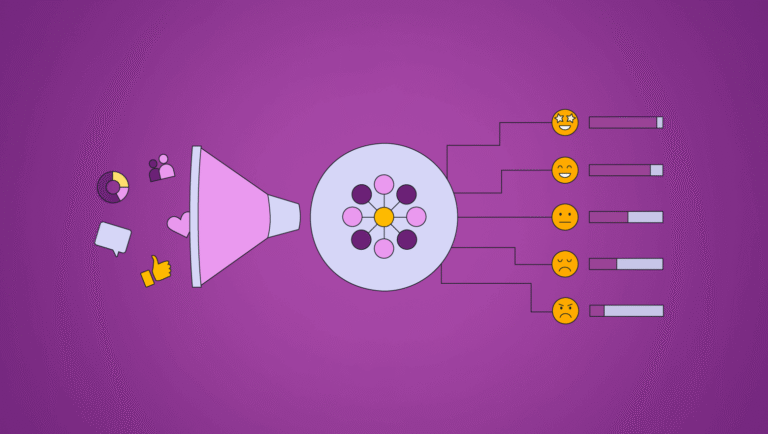
- Accurate sentiment classification, positive, negative, or neutral, that understands dialect-specific tone.
- Named entity recognition that correctly identifies brand names even when spelled inconsistently.
- Topic clustering that groups related conversations even when different words are used to describe the same issue.
- Spam and bot detection to filter out noise from genuine customer conversations.
- Emotion detection that goes beyond simple sentiment to identify frustration, excitement, or urgency.
AIM Insights: Built for Arabic-First Brand Intelligence

This is exactly the gap AIM Insights was built to close. As the flagship social listening solution from AIM Technologies, AIM Insights is engineered from the ground up for the Arabic language and the MENA market, not adapted afterward as an add-on feature.
What sets AIM Insights apart:
- Native Arabic dialect processing that accurately understands Egyptian, Gulf, Levantine, and North African Arabic, including Arabizi and mixed-script content.
- Real-time monitoring across social media, news outlets, forums, and blogs, giving brands a complete view of their online reputation as conversations happen.
- Advanced sentiment and emotion analysis calibrated specifically for Arabic cultural context, so brands understand not just what is being said, but how it truly feels.
- Competitor benchmarking tools that let businesses compare share of voice, sentiment, and engagement against direct competitors in their sector.
- Customizable dashboards and automated reports that turn raw mentions into clear, actionable business intelligence for marketing, PR, and customer service teams.
- Crisis detection alerts that flag sudden spikes in negative sentiment, allowing brands to respond before a small issue becomes a full reputation crisis.
For businesses across banking, telecom, FMCG, automotive, retail, and government sectors, AIM Insights has become the trusted engine behind smarter, faster, and more culturally accurate decision-making. Instead of guessing what your Arabic-speaking audience thinks, AIM Insights gives you the data to know for certain.
4. Set Up Real-Time Alerts and Track Sentiment Over Time
Track brand mentions in Arabic is only valuable if you can act on them quickly, and a single mention tells you very little on its own. The real value comes from combining real-time alerts with long-term sentiment analysis.
Best practices for alerts and reporting:
- Set threshold-based alerts for sudden spikes in mention volume.
- Create separate alert categories for customer service issues, PR opportunities, and competitor activity.
- Schedule weekly and monthly sentiment trend reports for leadership review.
- Share automated dashboards with relevant departments, including marketing, customer service, and executive teams.
- Track response time metrics to measure how quickly your team addresses negative mentions.
What to look for in your sentiment trends:
- Recurring complaints that signal a product or service issue needing attention.
- Seasonal spikes tied to campaigns, holidays, or regional events.
- Shifts in sentiment following a product launch, price change, or PR event.
- Comparison of your sentiment trend against competitors in the same period.
- Emerging topics or keywords gaining traction within your industry conversation.
5. Choose the Right Platform to Track Brand Mentions in Arabic
Data without action is just noise. The final step is building a workflow where insights from Arabic brand tracking directly inform business decisions, powered by a platform actually built for the region.
Ways to operationalize your findings:
- Feed customer complaints directly into your customer service team’s response queue.
- Use trending topics to inform content and social media calendars.
- Share competitor insights with your product and marketing teams to identify gaps.
- Use crisis alerts to activate your PR response plan immediately.
- Present quarterly sentiment reports to leadership to justify budget and strategy decisions.
Generic global tools built primarily for English-language markets will always struggle to deliver the depth and accuracy that Arabic brand tracking demands. Businesses operating in Egypt, Saudi Arabia, the UAE, and across the wider MENA region need a solution that understands the language, the culture, and the digital behavior unique to this market.
Common Mistakes Brands Make When Tracking Arabic Mentions
- Relying solely on brand name searches without dialect variations or Arabizi spellings.
- Ignoring visual platforms like Instagram and TikTok where much of the younger audience engages.
- Failing to differentiate between genuine sentiment and sarcasm, which is common in Arabic social commentary.
- Treating all MENA countries as a single homogeneous market instead of tracking regional dialect differences.
- Not integrating brand tracking data with customer service and PR workflows, leaving valuable insights unused.
Avoiding these mistakes can mean catching a crisis early instead of managing one that already went viral.
Conclusion
Tracking brand mentions in Arabic is no longer optional for businesses serious about their reputation across the MENA region. From building the right keyword strategy to leveraging AI-powered Arabic natural language processing, every step in this process requires tools designed specifically for the complexity of the Arabic language and its many dialects.
AIM Insights by AIM Technologies was built precisely for this challenge, giving brands the accuracy, depth, and real-time intelligence needed to truly understand their Arabic-speaking audience. Whether you are managing a national brand or expanding across multiple MENA markets, the right social listening platform can transform how you understand, engage, and grow with your customers.
Ready to see how AIM Insights can help you track, understand, and act on every Arabic brand mention that matters? Request a demo from AIM Technologies today and discover what your customers have really been saying all along.