

In today’s digital age, understanding and interpreting human sentiments have become crucial for businesses, researchers, and individuals alike. Sentiment analysis, also known as opinion mining, is a powerful tool that goes beyond surface-level data to uncover the emotional nuances hidden in texts. From analyzing customer service interactions to assessing product reviews or evaluating an online review, this field has numerous applications. Let’s delve into the world of sentiment analysis, its meaning, applications, and the fascinating ways it impacts our interconnected lives.
Introduction to Sentiment Analysis Meaning
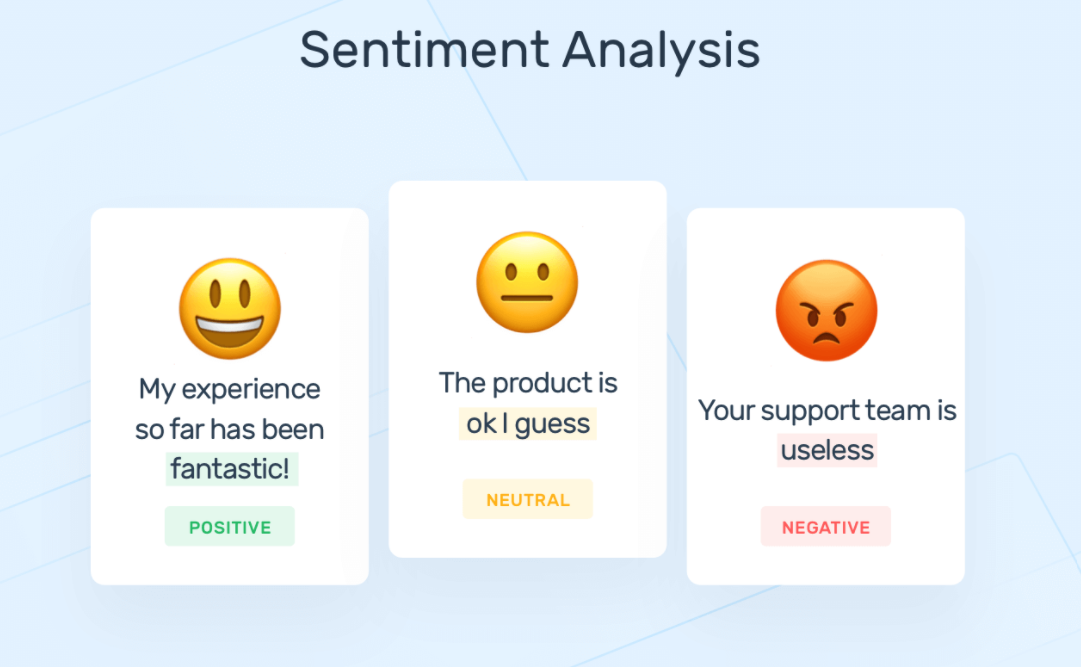
Sentiment analysis meaning involves deciphering the emotions, opinions, and attitudes expressed in textual data. In a world inundated with information, businesses and individuals use sentiment analysis to gain valuable insights into customer feedback, news articles, and online reviews. This process allows them to understand not just what is being said but how people feel about a particular product or service.
1. Definition and Importance
At its core, sentiment analysis meaning aims to determine whether a piece of text expresses positive, negative, or neutral sentiments. Its importance lies in its ability to extract actionable insights from vast amounts of unstructured data, providing a deeper understanding of public opinion and user experiences.
2. Applications in Various Industries
Sentiment analysis finds applications in diverse industries, including marketing, customer service, finance, and healthcare. Businesses leverage sentiment analysis to gauge customer satisfaction, manage brand reputation, and make data-driven decisions. Researchers use it to analyze public sentiment on social issues, and educators explore its potential in understanding student feedback and emotions.
How Sentiment Analysis Works
Understanding the mechanics of sentiment analysis is crucial for appreciating its capabilities. The process involves several steps, from data collection to sentiment classification.
1. Overview of the Process
Sentiment analysis typically begins with data collection, where a piece of text is gathered from various sources, such as social media, news articles, and surveys. The collected data then undergoes preprocessing, including tasks like tokenization and stemming, to make it suitable for analysis. Sentiment analysis algorithms extract features and classify sentiments using various techniques, such as aspect-based sentiment analysis for deeper contextual understanding.
2. Key Components and Techniques
The heart of sentiment analysis lies in its ability to analyze sentiment accurately. Machine learning algorithms, including natural language processing (NLP) techniques, play a significant role in this classification process. NLP helps computers understand and interpret human language, allowing sentiment analysis models to recognize emotions and sentiments in text.
Natural Language Processing (NLP) in Sentiment Analysis
NLP acts as the backbone of sentiment analysis, enabling computers to comprehend the complexities of human language.
1. Role of NLP in Understanding Human Emotions
NLP techniques, such as sentiment lexicons and semantic analysis, enable computers to interpret textual data accurately. Deep learning advancements further enhance the capacity to understand complex human emotions.
2. Challenges and Advancements in NLP for Sentiment Analysis
Challenges like ambiguity, sarcasm, and cultural nuances persist, but the integration of advanced neural networks ensures continued improvement in sentiment classification.
Importance of Sentiment Analysis in Business
Businesses, in particular, stand to gain substantial benefits from implementing sentiment analysis into their operations.
1. Customer Feedback Analysis
Sentiment analysis enables businesses to understand customer feedback by evaluating emotions expressed in online reviews or product reviews. This helps identify areas for improvement and drive customer satisfaction.
2. Brand Reputation Management
By analyzing news articles and social media mentions, companies can manage their online reputation and make informed decisions to address public sentiment effectively.
Sentiment Analysis Tools
A myriad of tools and technologies are available for businesses and researchers looking to integrate sentiment analysis into their workflows.
1. Popular Sentiment Analysis Tools
Tools like VADER, TextBlob, and AIM Insights are popular choices for sentiment analysis. These tools offer pre-trained models and easy-to-use interfaces, making sentiment analysis accessible even for those with limited technical expertise.
Leading tools like VADER and TextBlob simplify the sentiment analysis process for businesses by offering user-friendly interfaces for text analysis.
2. Emerging Technologies in Sentiment Analysis
Advancements in machine learning, deep learning, and sentiment analysis algorithms has led to highly customizable models, catering to industries like customer service and content creation.
Challenges
While sentiment analysis has proven immensely valuable, it is not without its challenges.
1. Ambiguity and Sarcasm
The inherent complexity of human language, including sarcasm and ambiguity, poses challenges for sentiment analysis models. Researchers are actively working on developing algorithms that can better interpret the nuanced nature of language.
2. Cultural and Linguistic Nuances
Sentiment analysis models may struggle with cultural and linguistic nuances, as expressions of emotions can vary significantly across different regions and languages. Ensuring the inclusivity and accuracy of sentiment analysis across diverse demographics is an ongoing consideration.
Benefits of Implementing Sentiment Analysis
The implementation of sentiment analysis offers a range of benefits for businesses and individuals alike.
1. Improved Customer Satisfaction
By promptly addressing concerns and adapting products or services based on customer feedback, businesses can significantly enhance customer satisfaction. Sentiment analysis provides actionable insights for businesses striving to meet customer expectations.
2. Real-Time Feedback for Businesses
Traditional feedback methods often involve delays, but sentiment analysis provides real-time insights. Businesses can adapt and respond swiftly to emerging trends and issues, staying ahead of the competition and meeting customer demands more effectively.
Real-World Examples of Successful Sentiment Analysis
The impact of sentiment analysis meaning is evident in various real-world scenarios.
1. Case Studies from Various Industries
Companies like Airbnb, Starbucks, and Netflix have leveraged sentiment analysis to understand user sentiments and improve their offerings. These case studies showcase how sentiment analysis can lead to tangible improvements in customer experiences and business outcomes.
2. Positive Outcomes and Lessons Learned
The success stories of businesses incorporating sentiment analysis emphasize the importance of staying attuned to customer sentiments. Lessons learned from these endeavors underscore the need for continuous improvement and adaptation to changing consumer preferences.
3. Aspect-Based Sentiment Analysis
This technique allows businesses to focus on specific attributes, such as a product or service feature, within customer reviews.
4. Social Media Sentiment Monitoring
Brands actively use sentiment analysis to monitor and address sentiments expressed in online reviews and social media posts, shaping their digital strategies.
Future Trends
As technology continues to evolve, so does the landscape of sentiment analysis.
1. AI Advancements
The integration of neural networks and deep learning will continue to enhance aspect-based sentiment analysis, improving accuracy and contextual understanding.
Ethical Considerations
Ensuring fairness, mitigating bias in sentiment analysis algorithms, and respecting user privacy are essential for ethical implementation.
1. Privacy Concerns
The collection and analysis of personal data for sentiment analysis raise privacy concerns. Striking a balance between extracting meaningful insights and respecting individuals’ privacy is essential for ethical sentiment analysis practices.
2. Bias and Fairness Issues
Sentiment analysis models may inherit biases present in training data, leading to skewed results. Addressing these biases and ensuring fairness in sentiment analysis outcomes is a priority for ethical and responsible implementation.
Tips for Effective Sentiment Analysis Implementation
Successful sentiment analysis implementation requires careful consideration and strategic planning.
1. Best Practices for Businesses
Businesses should tailor sentiment analysis models to their specific needs, considering industry-specific language and cultural nuances. Regular updates and improvements to models based on evolving language trends are essential for maintaining accuracy.
2. Customization for Specific Industries
Different industries may require unique approaches to sentiment analysis. Tailoring models to understand the specific language and context of an industry ensures more accurate results and actionable insights.
Sentiment Analysis and Social Media
Social media platforms serve as rich sources of data for sentiment analysis.
1. Monitoring Social Media Sentiments
Brands and individuals can monitor sentiments on social media platforms to gauge public opinion and track brand mentions. This real-time monitoring allows for swift responses to emerging trends and potential crises.
2. Impact on Online Reputation
The impact of social media sentiments on online reputation is undeniable. Managing sentiments on social media is not just a reactive measure but a proactive strategy for building and maintaining a positive online presence.
Sentiment Analysis in Content Creation
Understanding audience sentiments is invaluable for content creators.
1. Tailoring Content Based on Audience Sentiments
By analyzing sentiments, content creators can tailor their material to resonate with their audience. This personalized approach enhances engagement and fosters a stronger connection between creators and consumers.
2. Enhancing Engagement Through Emotional Intelligence
Content that reflects an understanding of audience emotions can create a more engaging and compelling experience. Sentiment analysis empowers content creators to infuse emotional intelligence into their work, fostering deeper connections with their audience.
Educational Insights into Sentiment Analysis
Sentiment analysis extends beyond business applications, contributing to academic research and the understanding of human emotions.
1. Role in Academic Research
Researchers leverage sentiment analysis to analyze public opinions on social and political issues, contributing valuable insights to academic discourse. The interdisciplinary nature of sentiment analysis spans fields such as psychology, linguistics, and computer science.
2. Contributions to the Field of Psychology and Linguistics
The exploration of sentiments in text data provides psychologists and linguists with a unique lens into human emotions and language usage. This interdisciplinary collaboration enhances our understanding of the intricate relationship between language, emotion, and cognition.
The Future Landscape of Sentiment Analysis
As we look ahead, the future of sentiment analysis holds exciting possibilities and challenges.
1. Predictions and Speculations
Experts predict that sentiment analysis will become even more accurate and nuanced, thanks to advancements in AI and machine learning. The ability to understand emotions in context and across diverse languages will open new avenues for applications.
2. Potential Breakthroughs and Challenges
Breakthroughs in sentiment analysis may come in the form of improved models capable of understanding the subtlest nuances of human emotions. However, challenges such as maintaining ethical standards and addressing biases in algorithms will persist, requiring ongoing attention and collaboration.
Conclusion
Sentiment analysis meaning enables us to uncover emotional nuances in textual data, empowering businesses to better understand their customers and make data-driven decisions. Whether through text analysis, sentiment classification, or aspect-based sentiment analysis, this technology holds immense potential across industries.
Are you ready to harness the power of sentiment analysis for your business? Explore the possibilities with AIM Technologies. Send us feedback, request a demo today, and discover how our advanced solutions can transform the way you interpret product reviews, customer service feedback, or any piece of text.
5 Unique FAQs
Can sentiment analysis accurately interpret sarcasm in the text?
- Sentiment analysis models struggle with sarcasm, as it often involves an incongruence between expressed and intended emotions. While advancements are being made, accurate interpretation remains a challenge.
How can businesses address bias in sentiment analysis results?
- Businesses should regularly audit and update sentiment analysis models, ensuring they account for biases present in the training data. Ethical considerations and fairness should be prioritized in model development.
What role does sentiment analysis play in academic research?
- Sentiment analysis is utilized in academic research to analyze public opinions on various topics, contributing valuable insights to fields such as psychology, linguistics, and computer science.
Is sentiment analysis effective in languages with diverse linguistic nuances?
- Sentiment analysis models may face challenges in languages with diverse linguistic nuances. Customization and continuous improvement are essential to address the complexity of languages and cultural expressions.
How does sentiment analysis impact content creation on social media?
- Sentiment analysis helps content creators tailor their material based on audience sentiments, enhancing engagement and fostering a more personalized connection with their audience.