


Arabic sentiment analysis API solutions available on the market today vary wildly in quality, and the gap between the best and worst options is far wider than most development teams expect going in. For businesses building customer feedback systems, social monitoring platforms, chatbots, or any application that needs to understand how Arabic-speaking users actually feel, choosing the wrong API doesn’t just produce mediocre results. It can produce actively misleading ones, classifying frustrated customers as satisfied, missing sarcasm entirely, and failing to distinguish between dialects that carry meaningfully different emotional registers.
The core problem is that most sentiment analysis APIs on the market were built primarily for English, with Arabic support added afterward as an extension rather than a foundation. That approach might work reasonably well for Modern Standard Arabic in formal, grammatically clean text, but it falls apart quickly when applied to the real, messy, dialect-heavy, code-switched Arabic that actually dominates social media, customer reviews, and everyday digital conversation across the Gulf and wider MENA region.
In this article, we’ll break down what a genuinely capable Arabic sentiment analysis API needs to handle, the common pitfalls that trip up generic solutions, and how AIM Technologies, through its AIM Insights module, delivers sentiment analysis built specifically for the linguistic realities of the Arabic-speaking world.
What Is an Arabic Sentiment Analysis API, Exactly?
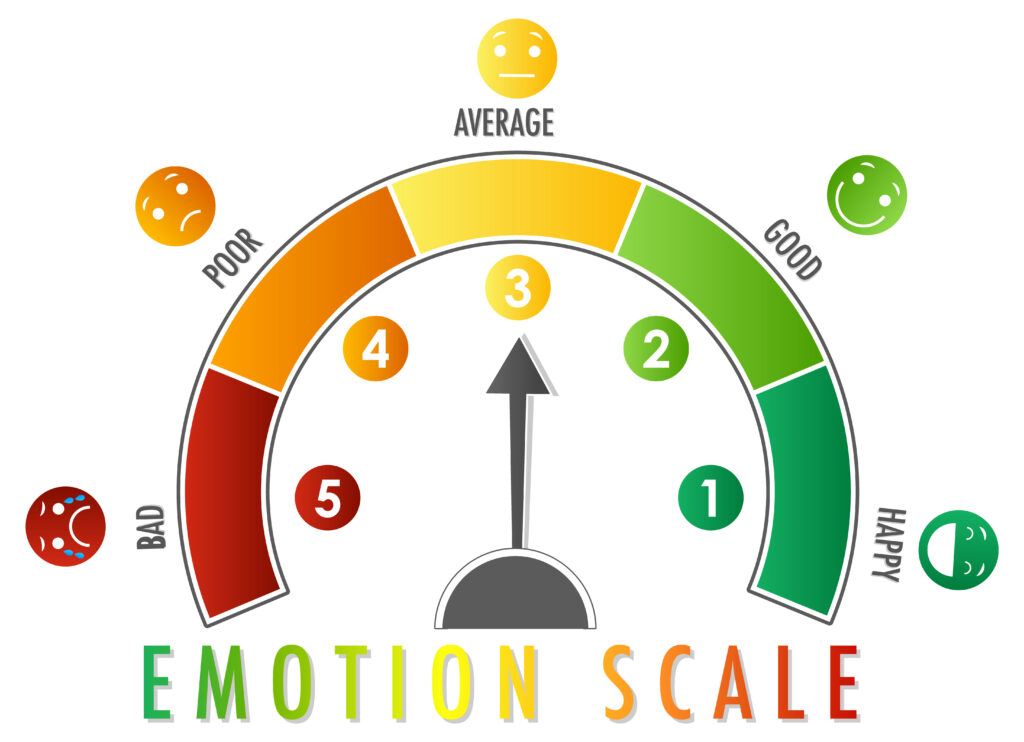
An Arabic sentiment analysis API is a programmatic interface that allows developers to send Arabic-language text, a tweet, a review, a customer service transcript, a survey response, and receive back a structured classification of the emotional tone, typically positive, negative, or neutral, along with confidence scores and sometimes more granular emotional categories.
A capable API typically returns:
- An overall sentiment classification, usually positive, negative, neutral, or mixed
- A confidence score indicating how certain the model is about its classification
- Entity-level sentiment, identifying sentiment toward specific products, features, or topics mentioned within a longer text
- Language and dialect detection, identifying which Arabic variant the text is written in
- Support for mixed-language input, handling text that combines Arabic and English within the same message
Developers integrate this functionality directly into their own applications, whether that’s a customer feedback dashboard, a social listening tool, a chatbot, or an internal analytics system, allowing sentiment classification to happen automatically at scale rather than through manual review.
Why Generic Sentiment Analysis APIs Struggle With Arabic
- Dialect Fragmentation: Arabic spans numerous regional dialects, Gulf, Levantine, Egyptian, Maghrebi, each with distinct vocabulary and expression patterns, and most generic APIs are trained primarily on Modern Standard Arabic, leaving them poorly equipped to handle how people actually write online.
- Morphological Complexity: Arabic is a morphologically rich language, meaning a single root word can take on dozens of different forms depending on prefixes, suffixes, and grammatical context, which requires specialized natural language processing techniques that many general-purpose models handle poorly.
- Diacritic Omission: Arabic script typically omits diacritical marks in everyday writing, which can make words that look identical actually carry different meanings, a distinction generic models frequently fail to resolve correctly.
- Code-Switching: Mixed Arabic-English text, extremely common in Gulf business and social contexts, confuses models that aren’t specifically built to process both languages within the same input simultaneously.
- Sarcasm and Indirect Criticism: As is well documented in Arabic sentiment research, sarcasm is notoriously difficult to detect, and generic models trained primarily on English sarcasm patterns often fail to catch the specific ways indirect criticism is expressed in Arabic.
- Limited High-Quality Training Data: Compared to English, there’s significantly less publicly available, high-quality labeled Arabic sentiment data, meaning many models simply haven’t seen enough diverse, real-world examples to perform reliably.
What to Look for in a Strong Arabic Sentiment Analysis API
Development teams evaluating options should prioritize APIs that offer:
- Genuine dialect coverage across Gulf, Levantine, Egyptian, and Maghrebi Arabic, not just Modern Standard Arabic
- Documented accuracy benchmarks tested specifically against real-world regional social and customer data, not just academic datasets
- Code-switching support for mixed Arabic-English input
- Entity-level sentiment extraction, not just overall document-level classification
- Reasonable latency and uptime guarantees suitable for production-scale applications
- Clear, well-documented API endpoints with straightforward authentication and response formats
- Confidence scoring that allows developers to flag low-confidence results for human review rather than treating every output as equally reliable
- Ongoing model updates that keep pace with evolving slang and expression patterns, since language usage shifts constantly, particularly among younger, digitally native users
Common Use Cases for an Arabic Sentiment Analysis API
- Customer Feedback Analysis: Automatically classifying sentiment across reviews, support tickets, and survey responses at a scale manual review simply can’t match.
- Social Media Monitoring Platforms: Powering the sentiment classification layer behind broader social listening and brand monitoring tools.
- Chatbot and Virtual Assistant Tuning: Helping conversational AI systems detect user frustration or satisfaction in real time and adjust responses accordingly.
- Call Center Quality Assurance: Feeding into voice analytics systems to flag negative-sentiment calls for supervisor review.
- Market Research Platforms: Automating sentiment classification across open-ended survey responses collected in Arabic.
- Content Moderation Systems: Helping identify potentially harmful or highly negative content at scale for further human review.
How a Poorly Built API Creates Downstream Problems
Consider a company building a customer feedback dashboard that integrates a generic, English-first sentiment API with basic Arabic support. During testing in a controlled environment with clean, formal Arabic text, the results look reasonable. Once deployed against real customer reviews, filled with dialect expressions, code-switched phrases, and sarcastic complaints, accuracy drops significantly. The dashboard shows an inflated satisfaction score, masking a growing pattern of genuine customer frustration that doesn’t surface until it shows up in churn numbers months later.
This exact scenario plays out repeatedly across the region, and it’s almost always traceable back to an API that wasn’t genuinely built and tested for the dialect-heavy, code-switched Arabic that real users actually produce.
Key Technical Considerations for Integration
- Response Format and Structure: Ensure the API returns structured, well-documented JSON responses that are easy to parse and integrate into existing systems.
- Rate Limits and Scalability: Understand the API’s rate limits and pricing structure to ensure it can handle your application’s actual production volume without unexpected costs or throttling.
- Latency Requirements: For real-time applications like chatbots, confirm the API’s response time meets your application’s performance requirements.
- Batch Processing Support: For applications analyzing large historical datasets, confirm whether the API supports efficient batch processing rather than requiring individual requests for every data point.
- Security and Data Handling: Understand how the API provider handles data privacy and security, particularly important when processing potentially sensitive customer feedback or communications.
A Closer Look: AIM Insights for Arabic Sentiment Analysis
This is exactly the gap AIM Technologies built AIM Insights to close. Rather than adapting an English-first sentiment model with basic Arabic support, AIM Insights was developed with deep regional language expertise built into its core, delivering an Arabic sentiment analysis API genuinely designed for how people in this region actually communicate.
Here’s what makes AIM Insights particularly effective as an Arabic sentiment analysis API:
- Native Dialect Coverage: AIM Insights is trained specifically on Emirati, Saudi, Egyptian, and Levantine dialects alongside Modern Standard Arabic, delivering significantly higher accuracy than generic, MSA-only models.
- Code-Switching Support: The API is built to process mixed Arabic-English input naturally, a critical capability for accurately analyzing Gulf business and social media conversation.
- Context-Aware Sarcasm Detection: AIM Insights incorporates contextual analysis specifically calibrated to catch sarcasm and indirect criticism common in Arabic-language feedback, reducing the misclassification risk that plagues generic sentiment engines.
- Entity-Level Sentiment Extraction: Beyond overall document sentiment, AIM Insights can identify sentiment toward specific products, features, or topics mentioned within a single piece of text.
- Confidence Scoring and Flagging: Ambiguous or low-confidence results are clearly flagged, allowing development teams to route uncertain classifications for human review rather than treating every output as equally reliable.
- Continuous Model Refinement: AIM Insights is continuously retrained on fresh regional social and customer data, ensuring accuracy keeps pace with evolving slang and expression patterns.
- Scalable, Developer-Friendly Integration: Built for production-scale applications, AIM Insights offers the reliability, documentation, and response structure developers need to integrate sentiment analysis smoothly into existing systems.
For any development team building an application that needs to genuinely understand how Arabic-speaking users feel, AIM Insights offers the linguistic depth, dialect coverage, and real-world accuracy that generic sentiment APIs simply cannot match.
Industries Building on Arabic Sentiment Analysis APIs
- Banking and Fintech: Where automated sentiment classification across customer feedback and support interactions supports both service improvement and compliance monitoring.
- E-commerce and Retail: Where sentiment analysis powers product review insights and customer service prioritization at scale.
- Telecom: Where sentiment classification across support tickets and social mentions helps identify emerging service issues quickly.
- Media and Entertainment: Where understanding audience sentiment toward content requires accurate, nuanced Arabic-language analysis.
- Government Digital Services: Where sentiment analysis across citizen feedback channels supports better public service design.
Final Thoughts
Choosing the right Arabic sentiment analysis API is a decision that ripples through every downstream application built on top of it, from customer feedback dashboards to chatbots to social monitoring platforms. A model that wasn’t genuinely built for dialect diversity, code-switching, and sarcasm will quietly produce distorted results that can mislead business decisions for months before the gap becomes obvious.
AIM Technologies built AIM Insights specifically to close that gap, delivering sentiment analysis grounded in real regional language expertise rather than a generic model with Arabic bolted on.
If your development team is ready to integrate sentiment analysis that actually understands Arabic the way it’s really spoken and written, now is the time to act. Request a free demo from AIM Technologies today and see how AIM Insights can power more accurate, reliable sentiment classification in your own applications.


